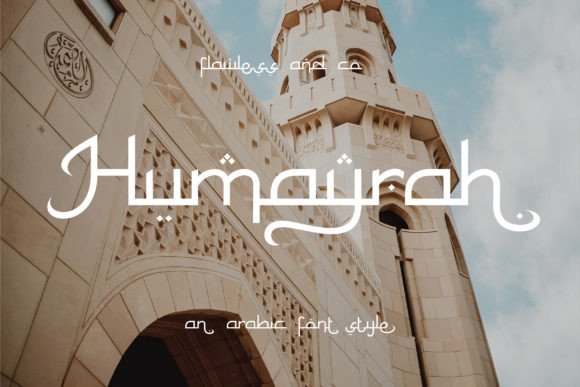
Humayrah Arabic Display Font for Web & Digital Design
When crafting digital experiences for Arabic-speaking audiences, finding a typeface that captures both cultural richness and contemporary elegance is a constant challenge. Humayrah steps into this gap as a meticulously hand-drawn Arabic display font. Unlike standard system fonts, every character in the Humayrah family carries the organic tension of calligraphy while maintaining the precision required for modern web layouts. As a designer building landing pages, e‑commerce stores, or brand identities, you'll immediately appreciate how this font becomes more than a text renderer—it becomes a strategic visual asset that shapes perception and guides user attention. The seamless flow between its strokes creates a harmonious balance that is as readable as it is beautiful, making it an indispensable tool in your digital type arsenal.
Elevating Arabic Web Typography with the Humayrah Display Font
Display fonts often define the personality of a digital project, and Humayrah does exactly that for Arabic scripts. The hand‑drawn elegance of each character introduces a human touch that geometric system fonts cannot replicate. When used in website headers, Humayrah instantly communicates premium quality—whether you're designing a cultural festival microsite, a gourmet restaurant's landing page, or a creative agency's portfolio. Because the letterforms themselves tell a story, they reduce the need for excessive graphic elements, leading to cleaner layouts that load faster and engage longer. In practical terms, this means higher visual retention in hero sections, because users are drawn to the rhythmic curves before they even read a word. For digital product creators aiming to differentiate a brand in crowded markets, these subtle refinements translate directly into perceived value and trust.
Humayrah for Luxury Branding and Premium Digital Experiences
Luxury branding relies on subtle details, and the Humayrah display font delivers them in abundance. Each letterform maintains a harmonious balance that designers can leverage across online stores, hotel booking platforms, and fashion e‑commerce. The hand‑drawn origin of the characters gives every heading a bespoke, artisanal feel, immediately elevating the brand's digital presence beyond mass‑market templates.
Humayrah for Boutique Online Stores and Fashion E-commerce
Picture a high‑end jewelry boutique: using Humayrah for the site’s main tagline and product category headers instantly places the brand in a rarefied space. The elegant curves and ligatures mimic custom hand‑lettering, eliminating the generic look of overused web fonts. For digital product creators, this means building trust and perceived value long before a customer clicks “add to cart.” When paired with muted color palettes and generous whitespace, Humayrah helps cultivate a serene, sophisticated atmosphere that keeps visitors scrolling and converting. Whether it’s a seasonal lookbook or an exclusive product launch landing page, this font ensures the brand’s voice remains consistent and unmistakably premium.
Using Humayrah in Hero Section Headlines for Visual Impact
The hero section is where conversion‑focused designers fight for milliseconds of attention, and the right display font can make or break that battle. Humayrah, with its deliberate hand‑drawn precision, works brilliantly for short, punchy headlines that sit over full‑screen background images. Because the font carries inherent movement and grace, it creates a visual focal point that scanning eyes naturally follow. I often recommend using Humayrah for the primary H1 in Arabic landing pages, then immediately dropping to a clean sans‑serif for the supporting subheadline. This contrast not only strengthens the visual hierarchy but also keeps the layout accessible on mobile—a point we’ll explore further. A practical tip: on dark overlays, apply a subtle text‑shadow or a semi‑transparent background behind the Humayrah text to maintain crisp legibility without compromising its elegant character. When you design a call‑to‑action section that relies on quick comprehension, Humayrah wraps the message in an air of exclusivity that plain fonts simply cannot achieve.
Humayrah Font Pairing for Modern Arabic and Latin Web Designs
No display font exists in isolation, and smart font pairing is what separates amateur layouts from professional‑grade digital products. Humayrah, as an elaborate Arabic script, shines brightest when paired with simple, unobtrusive companions. For bilingual websites that serve both Arabic and European languages, I pair Humayrah with a neutral sans‑serif like Inter, Nunito, or SF Pro for body copy and secondary headings. The stark contrast between the flowing hand‑drawn strokes and the clean geometric structure of the sans‑serif creates a modern editorial vibe that works exceptionally well for online magazines, thought‑leadership blogs, and cultural event pages.
The key is to let Humayrah own the primary visual voice while the supporting typeface remains silently functional. Tested pairings include:
- Humayrah + Inter – for modern, clean bilingual sites with a neutral tone.
- Humayrah + Lora – for editorial, literature, and luxury editorial design.
- Humayrah + Montserrat – for bold, geometric contrast on landing pages.
Each combination preserves the brand’s premium edge while ensuring body text is effortlessly readable. If the project leans toward classical elegance, a transitional serif like Cormorant can replace the sans‑serif, reinforcing a literary, high‑end feel. Remember that Humayrah is primarily an Arabic display font, so verify if the shipped files include Latin characters for fallback or if you will need to manually pair with a separate Latin typeface for mixed‑script paragraphs.
Readability and Hierarchy: How Humayrah Performs on Mobile Screens
A perennial concern with decorative typefaces is their behaviour on smaller viewports, but the Humayrah font handles responsive layouts gracefully. Its hand‑drawn nature means strokes are deliberately weighted, avoiding the thin hairlines that disappear on retina screens. For mobile‑first design, I suggest setting Humayrah headlines no smaller than 24px—ideally larger when used in hero areas—and always checking contrast against background textures. On light backgrounds, the elegant rhythm of the characters is most pronounced; on dark themes, slightly increasing the font weight (if multiple weights are available) maintains legibility.
Because Humayrah is clearly a display font, never force it into button labels, input fields, or small‑scale navigation elements. Its strength lies in creating a majestic first impression, so reserve it for h1 and h2 elements and let a readable sans‑serif handle the rest of the content hierarchy. This approach preserves brand tone without sacrificing usability, which is exactly what search engines and users reward. When viewers land on your course sales page or blog header from a mobile device, the carefully considered type scaling ensures that Humayrah continues to communicate sophistication without loading delays or rendering quirks.
Licensing Humayrah for Commercial Web Projects and Client Work
Every web designer who plans to use premium fonts in professional projects needs to verify licencing terms before integrating them into a live environment. As you consider Humayrah for your next client website or digital product, check the specific commercial licence that ships with the font files. Most display fonts today are distributed with webfont capabilities—typically WOFF and WOFF2 formats—so you can host them on your server or embed them via @font‑face for consistent rendering across browsers. Confirm the number of pageviews or monthly visitors covered, and whether the licence extends to e‑commerce platforms, SaaS applications, or digital template creation.
If you are building a brand kit or a digital template that you intend to sell, ensure the license allows derivative use. Proactively clarifying these points saves you legal headaches and assures clients that their online identity is built on a solid, authentic foundation. A well‑licensed Humayrah implementation means you can confidently roll out the font across landing pages, digital ads, social media graphics, and email newsletters, knowing every touchpoint reinforces the same curated aesthetic. Designers often overlook this step, but in a competitive web design market, the ability to legally use a distinctive Arabic display font like Humayrah becomes a genuine competitive advantage.
Expanding Creative Use Cases: Humayrah in Portfolios, Online Shops, and Digital Ads
The versatility of a well‑crafted display font like Humayrah extends far beyond traditional website headers. Web designers and digital product creators are increasingly turning to custom type solutions to differentiate their brand assets. For a photographer’s portfolio, Humayrah can sit atop a gallery grid overlay, its hand‑drawn elegance complementing the visual artistry without competing with it. On an online course sales page, using Humayrah for the main value proposition headline immediately positions the offering as premium, boosting trust and reducing bounce rates.
Even in digital ad banners—those small, fast‑loading creatives we design for Google Display Network or social media—Humayrah’s distinct character shapes arrest the user’s scroll. Because the font already carries so much visual interest, you need fewer effects and animations to achieve an eye‑catching result. Ultimately, whether you’re building a SaaS landing page, a boutique’s “new collection” promo, or a congregational event hub, Humayrah operates as a silent brand ambassador, consistently translating elegance into pixels. When you integrate it thoughtfully into your design system, you turn mere text into a recognizable design asset that customers come to associate with quality.